Posts

Ciphered Bodies - Disciplined Bodies

Image
As an addendum to what I have written before, I would like to write down some of the aspects Annette Peller pointed out in her book ‘ Chriffierte Körper – Disziplinierte Körper. Female Genital Cutting. Rituelle Verwundung als Statussymbol’.   To my knowledge, there is no English translation of the book. The title would probably read as follows: Ciphered Bodies - Disciplined Bodies. Female genital cutting. Ritual wounding as a status symbol ' . The book represents her PhD thesis and was written in 2000. First, Annette Peller prefers to use the word ‘ Excision ’ instead of cutting or mutilation, since it is somewhat more neutral and the term is better able to handle certain aspect of ritual wounding. Annette Peller did much of her research while living with the Arbore and other ethnic groups in Southern Ethiopia. A girl or woman who wants to undergo such body modifications (or ritual punishments, like flogging) must be willing and able to endure strong pain and to accept ...
Circumcision: Literature and References

Image
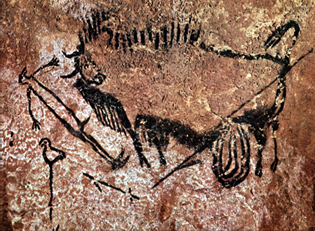
Note : Some referenced books, articles and illustrations are very explicit. Viewer discretion strongly advised. Remark : this selection of literature may be biased and does certainly only scratch the surface of available publications (both Pro and Con). Picture: Lascaux Caves (France) - Prehistoric Paintings. A man with a bird head and a bison. This file is licensed under the Creative Commons Attribution-Share Alike 3.0 Unported license / Author: Peter80   History ·        Male Genital Representation in Paleolithic Art: Erection and Circumcision Before History. Conclusions of the authors: The erection in Paleolithic art is explicitly represented in almost all the figures defined as unequivocally male that have survived to the present and in many objects of portable art. Circumcision and/or foreskin retraction of the penis are present in most of the works. Link: https://www.sciencedirect.com/science/article/abs/pii/S0090429...

Here and now

Image
It is strange that in modern times with all our technological advances and understanding of how nature / technology works … there are still 30% of all adult males circumcised (thereof two-thirds being Muslims). The current male circumcision rate is about 5,000 per day, or 1,8 million per year.   For female circumcision (all types): about 2 00 million girls and woman have suffered some form of female genital mutilation, and about three million are considered at risk of undergoing FGM annually. Source: https://www.who.int/teams/sexual-and-reproductive-health-and-research/areas-of-work/female-genital-mutilation/prevalence-of-female-genital-mutilation   All this means that ancient rites and traditions are still a significant ‘indicator’ of humanity (better: human conditions). So, on the one hand quantum computers and on the other: ‘knifes and stones’ (including surgical tools). And not to forget: at least two monotheistic religions do not conceive male circumcision ( ...

Back to my basic questions

Image
Now, finally, I would like to come back to my original questions about who/how/why invented such ideas of ‘circumcision’ . Here I drew much helpful information from the book ‘Genesis of Symbolic Thought’ by Alan Barnard (highly recommended)   Genesis of Symbolic Thought, Alan Barnar d A person can only grasp the concept of ‘ circumcision ’ if they are enough evolved (like homo sapiens (sapiens) ) to understand the meaning and implications of doing this. Furthermore, in order to connect this practice with cultural or religious identity and embed it into the cycle of life, more abstract concepts and s ymbolizations must be understood and communicated.   Theories of mind and the understanding of levels on intentionality must also be available.     The generation of symbolic thought could have occurred about 100,00 years ago but most certainly around 50,000 years ago , as can be derived from cave art. This came together with the use of tools for ornamentation...